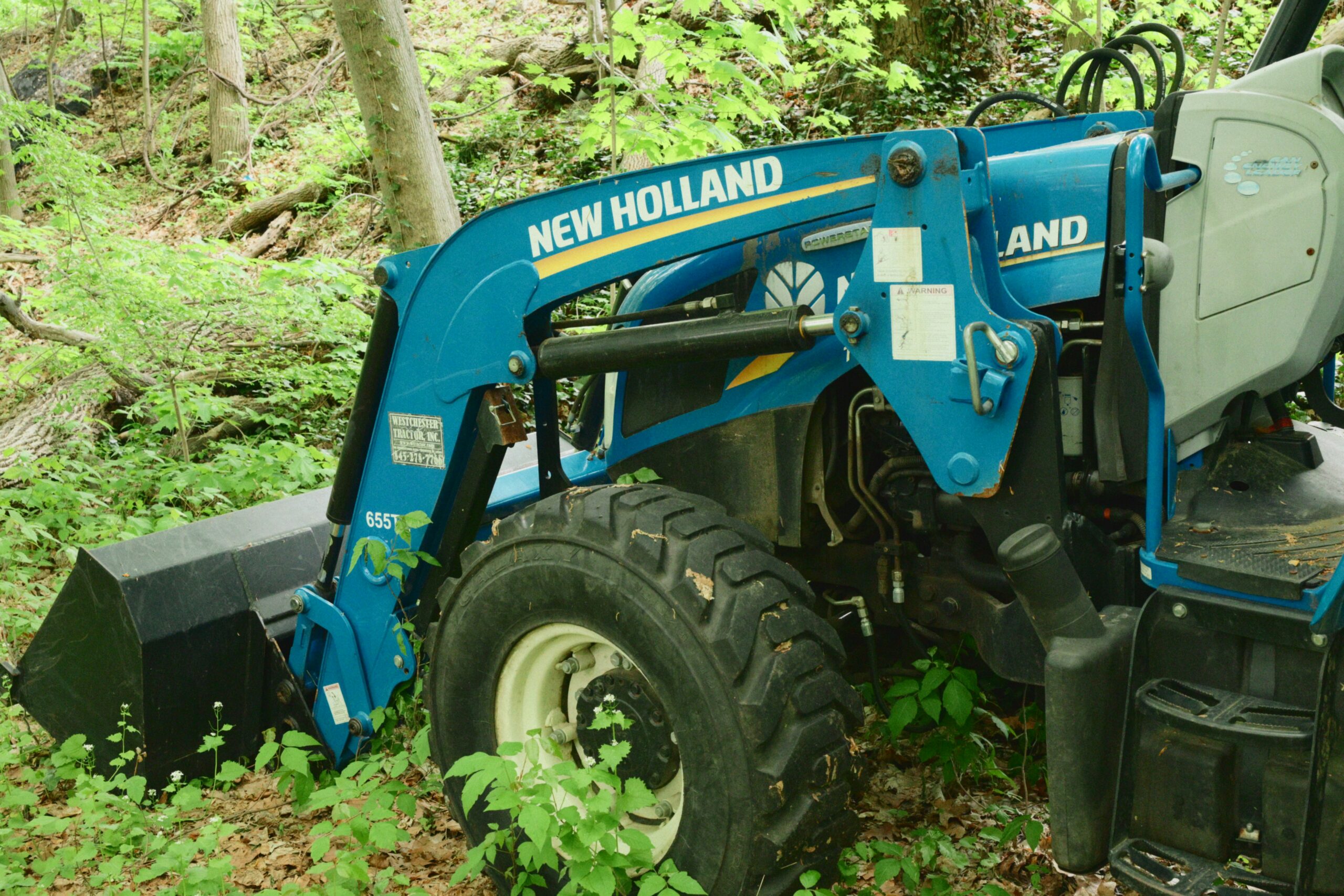
Common New Holland Tractor Problems and How to Fix Them
Some links here are affiliate links — if you buy through them, Dirt Road Mechanic earns a commission at no extra cost to you. It never affects which parts or tools we recommend. Full disclosure.
New Holland has a solid reputation, and it’s mostly deserved. But the failures that do show up tend to get misdiagnosed in expensive ways — a cold-start problem chased as fuel, a transmission fault treated as a rebuild, a fuel issue that no visual inspection will ever find.
Why Cold-Start Failures Get Misdiagnosed
The single most expensive mistake New Holland owners make is assuming a cold-start failure is a fuel problem. It rarely is. Cold-starting failures on New Holland tractors almost always trace back to electrical weakness — a battery that tests acceptable at shop temperature but drops below threshold in the cold, a glow plug system that’s partially failed, or a corroded ground connection that’s been slowly getting worse since last winter.
Farmers on TractorByNet have documented this repeatedly — owners who replaced fuel filters, bled lines, and even pulled injectors before someone finally checked battery voltage under load and found the real problem. The fix is usually a battery and a ground-connection cleanup, not anything fuel-related. Before you do anything else on a hard-starting New Holland, put a NOCO Genius 10 on the battery overnight and test voltage under crank. You’ll either solve it or rule it out in one step.
This matters because the fuel system on some New Holland models does have its own real problems — and you want to know you’re actually dealing with one before you start pulling components. Our full guide to tractor electrical problems covers the complete diagnostic process if you want to go deeper on this.
The T5060 Fuel Problem That Stumps Everyone
The T5060 has a well-documented injection pump issue that doesn’t behave like a normal fuel issue, and that’s exactly why it stumps people. The lift pump works fine. Fuel gets to the filter. The lines look clean. But the engine misfires and starves anyway.
The cause is almost always either internal injection pump wear or air ingress — and the keyword is “internal.” You can inspect every external fuel line and fitting and find nothing wrong, because the vacuum leak is inside the system. The only way to catch it is a vacuum test on the suction side of the pump. Visual inspection won’t find it. A common thread on MyTractorForum shows owners going through multiple filter changes and line inspections before a mechanic finally ran a vacuum test and found the problem in ten minutes.
If you’re dealing with a T5060 that misfires, starves, or runs rough despite a working lift pump and clean filters, go straight to the vacuum test before you do anything else. It saves hours of chasing the wrong thing. PB Blaster is worth having on hand when you get to pulling the pump — those fittings are usually well seized by the time this shows up. For a broader look at fuel system diagnosis across tractor brands, our tractor fuel system problems guide has a step-by-step walkthrough.
New Holland Tractor Problems With the Boomer CVT Transmission
The Boomer series with CVT transmission has a recurring no-movement problem that’s frustrating because of what it isn’t — it’s usually not the transmission itself failing mechanically. The tractor runs fine, the hydraulics work, but it won’t move forward or reverse, no matter what you do.
The usual culprits are the transmission control module, related relays, and hydraulic pressure in the transmission circuit. Low hydraulic pressure is particularly sneaky because it puts the CVT into a protective no-drive state that looks exactly like a mechanical failure. Before any major transmission work gets authorized, hydraulic pressure in the transmission circuit needs to be verified. A hydraulic pressure test gauge kit will tell you if pressure is the issue before you start pulling components. If the hydraulics are behaving strangely in other ways too, our tractor hydraulic problems guide covers the full diagnosis from the ground up.
What makes it especially frustrating is the warranty coverage gap. New Holland warrants CVT-equipped tractors for 24 months or 2,000 hours on the drivetrain — but non-CVT tractors get 60 months or 1,500 hours on the same components. The more complex, more expensive transmission gets significantly shorter coverage. That’s worth knowing before you buy, and worth checking if you’re still inside the window.
Reading the Fault Codes Before You Authorize Work
Modern New Holland tractors with electronically controlled transmissions throw specific fault codes that most owners don’t know how to read — and misreading them leads to expensive repairs for problems that are actually simple.
Fault code 24 means uncalibrated clutches. This requires a technician with a diagnostic tool to recalibrate — it’s not something you can fix with parts. But it’s also not a transmission rebuild. Owners who don’t know this authorize major work when a calibration procedure would have solved it.
Fault code 70 means the battery voltage is too low for the clutch solenoids to engage properly. The transmission won’t shift correctly, not because anything is mechanically wrong, but because the solenoids aren’t getting enough power. The fix is the electrical system, not the transmission. A Fluke 115 multimeter will confirm battery voltage and solenoid circuit voltage in a few minutes — the same tool that solves most tractor electrical problems before they turn into shop visits.
Solenoid failures themselves are the most common cause of stuck or skipping shifts across the New Holland lineup. When a solenoid fails, the gear it controls becomes inaccessible. The symptom is dramatic — a tractor that suddenly won’t shift into certain ranges — but the repair is usually a solenoid replacement, not a transmission overhaul. Use Permatex dielectric grease on the electrical connectors when you reassemble — moisture is what kills these solenoids in the first place. The same solenoid failure pattern shows up on other brands too — we documented it in our Massey Ferguson tractor problems piece if you want to see how it compares.
The Parts Delay Nobody Mentions
This is the part most articles on the brand skip entirely, but it’s directly relevant to anyone who needs repairs done right now.
CNH — the parent company behind New Holland — temporarily halted all equipment shipments from North American plants and European imports in April 2025 to assess tariff impacts. Around the same time, the company laid off nearly 400 workers at its Fargo, North Dakota, and Benson, Minnesota plants, citing weak market conditions. CNH’s agriculture division reported sales down over 30% in late 2024, and the company has been actively reducing production and dealer inventory.
What this means practically: dealer service capacity is tighter, parts pipelines have been disrupted, and wait times for both service appointments and specific components have stretched out in many areas. A common concern on farming forums right now is owners waiting weeks for parts that used to arrive in days. This doesn’t mean you can’t get your tractor fixed — it means you should plan, keep a basic parts inventory for common wear items, and don’t count on a quick turnaround if something goes wrong during busy season. Having the right fluids and filters on hand matters more right now than it did two years ago. A good UTTO hydraulic fluid stocked before you need it is a lot better than waiting on a backordered shipment mid-harvest.