Most Reliable Compact Tractor in 2026: What Owner Data Says vs. What Buyers Believe
Some links here are affiliate links — if you buy through them, Dirt Road Mechanic earns a commission at no extra cost to you. It never affects which parts or tools we recommend. Full disclosure.
The most reliable compact tractor you can buy in 2026 is not necessarily the one your neighbor swears by, the one with the biggest dealer network, or the one flooding your YouTube feed with sponsored reviews. Tariffs on steel, aluminum, and copper equipment dropped from 25% to 15% in June, but industry groups say the real-world savings are limited — Deere alone expects a $1.2 billion tariff hit in fiscal 2026, roughly double last year’s. Farmers are responding by holding onto equipment longer, and getting this decision wrong costs more than it ever has.
The Most Reliable Compact Tractor Isn’t the One With the Most Loyal Buyers
Here’s what surprises most people shopping this category. Survey data from the Progressive Farmer Reader Insights Study — one of the largest ongoing surveys of actual tractor owners in the country — shows that Kubota leads John Deere on reliability by problems-per-unit. And yet John Deere has the highest repeat buyer rate of any brand at 52%, compared to Kubota’s 41%. What that tells you is that brand loyalty and actual mechanical reliability are two completely different conversations in this market. People buy green again because of the dealer experience, the attachment ecosystem, and 100 years of brand culture — not because the machine breaks down less. If you’re shopping based on what the most popular brand in your county is, you may be making a cultural decision dressed up as a mechanical one.
On the hardware side, the differences between brands are real and worth understanding. Kubota uses cast iron transmission cases across most of their lineup — heavier, better heat dissipation under sustained load, and nearly impossible to crack under normal use. John Deere runs cast aluminum in their sub-compact and many compact models, which is lighter, rust-resistant, and engineered with cooling fins. For most small acreage owners putting light hours on a machine, either holds up fine over the life of the tractor. But if you’re doing sustained heavy loader work in heat all day, the cast iron argument starts to matter. Farmers on MyTractorForum who’ve run both note that Kubota’s hydraulic flow tends to run significantly stronger than comparable Deere models, which affects how implements respond under load.
Why Everything Clusters at 25 HP
Most buyers never stop to ask why compact tractors cluster around 25 HP. It’s not a coincidence — it’s an emissions strategy. Cross 25 HP and federal Tier 4 Final emissions regulations kick in, requiring Diesel Particulate Filters and, in some cases, Diesel Exhaust Fluid systems. Those add $3,000 to $5,000 to the purchase price and introduce some of the most frustrating mechanical problems in modern tractor ownership. DPF filters need periodic regeneration cycles — the engine has to hit high temperatures to burn off accumulated soot — and if you’re running a lot of short-cycle work, doing light tasks at low RPMs, or operating in cold weather, the filter clogs faster than the manual prepares you for. Most tractor manuals don’t even mention how much faster soot accumulates in cold temperatures or at altitude.
A discussion on TractorByNet from late 2025 captured this frustration well — a buyer shopping in the 35–40 HP range said he was seriously considering stepping back down to a 25 HP tractor just to skip the emissions equipment, even though the extra power would’ve been useful. That’s not an uncommon calculation right now. Auction data from Machinery Pete backs it up: prices for pre-DEF compact tractors are running higher than DEF-equipped equivalents at sale. The used market is reflecting what a lot of farmers already figured out on their own — simpler engines stay running.
The Brand Nobody Brings Up
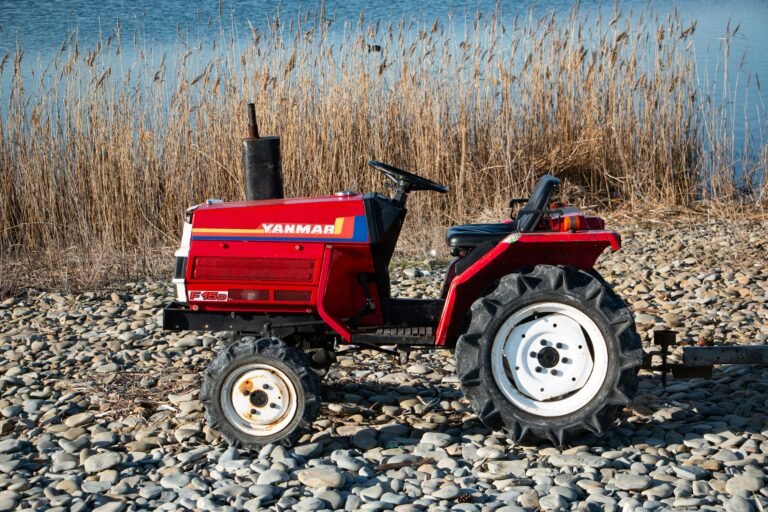
Yanmar doesn’t come up in most buying conversations at the dealership, which is ironic because Yanmar engines power John Deere’s own 3-series compact tractors. If you haven’t priced a Yanmar, you’re leaving one of the strongest warranties in the market off your list. The brand has been ranked number one in product quality by the Equipment Dealers Association for seven consecutive years, and every Yanmar sold in the U.S. comes standard with a 10-year, 3,000-hour limited powertrain warranty — the only warranty of its kind in the market. Kioti backs its DK series with 6 years. Most brands top out around 5. Yanmar’s reasoning is straightforward: when you design and build the engine, the axle, the transmission, and the final drive all in-house to your own spec, you can stand behind all of it.
The catch — and it’s a real one — is dealer coverage. A TractorByNet member described it plainly: he had settled on a Yanmar until he found out there were no dealers in his state actually stocking tractors. Great machines, he said, but he couldn’t find one to buy. If you’re within a reasonable drive of a Yanmar dealer, it deserves a serious look. If not, a 10-year warranty doesn’t help much when parts are 200 miles away.
How I’d Choose
Whatever brand you land on, a few things stay true regardless. The closest honest dealer matters more than the name on the hood — a TractorByNet regular said it bluntly: “All tractors will break down. I’d worry more about ease of service and parts availability than any claims of reliability.” A breakdown 60 miles from your service center costs you in time and money that no warranty covers. Second, if you’re buying in the 25 HP range, avoiding emissions complexity is a real advantage — treat it like a feature, not a limitation. Third, whatever machine ends up in your barn, keeping the battery maintained over winter is the cheapest reliability move you can make — something like the NOCO Genius 10 handles that on any tractor you own. And if you’re running a John Deere, our guide to John Deere hydraulic fluid covers the specifics — using the correct Hy-Gard hydraulic oil on the right service interval isn’t a suggestion — it’s what the transmission is built around.
The bottom line on finding the most reliable compact tractor in 2026 is that reliability isn’t just a brand question. It’s an HP question, a dealer location question, and a tariff question that affects what you’ll pay to replace or repair it down the road. The farmers who hold up best are the ones who bought for their actual workload, stayed under the emissions threshold when they could, and picked the brand with the closest dealer they trusted. Once you’ve picked a tractor, match your implements to it — start with what size bush hog fits a 40 HP tractor.
FAQ
What is the most reliable compact tractor brand? By owner survey data, Kubota leads on fewest problems per unit, but Yanmar leads on warranty length and independent quality rankings. John Deere leads on resale value and repeat buyer rate. “Most reliable” depends on what metric you’re measuring — they don’t all point to the same brand.
Is a 25 HP tractor enough for a small farm? For most small farm work — mowing, light loader work, tilling, snow removal on 5–20 acres — 25 HP handles the job. The bigger benefit of staying at or under 25 HP is avoiding Tier 4 emissions equipment like DPF filters, which add purchase cost and ongoing maintenance complexity that catches a lot of owners off guard.
Does dealer location really matter that much when buying a compact tractor? More than most buyers expect. A tractor with a strong warranty but no local dealer support can cost more in downtime and transport costs than a slightly less polished machine with a dealer 10 minutes away. It’s one of the most consistently underrated factors in the buying decision, and experienced owners on every forum will tell you the same thing.
Is it better to buy used right now? It depends on what you’re avoiding. Pre-emissions machines are commanding a premium on the auction market precisely because buyers want to skip the DPF and DEF systems, so “used” doesn’t automatically mean cheaper in that segment. What used does get you is a known quantity — a machine with hours on it has already shown you whether it was assembled well. Buy from someone who can tell you what it did for a living.
What’s your take on this? Drop it in the comments.