How to Winterize a Tractor Before Winter Does It for You
Some links here are affiliate links — if you buy through them, Dirt Road Mechanic earns a commission at no extra cost to you. It never affects which parts or tools we recommend. Full disclosure.
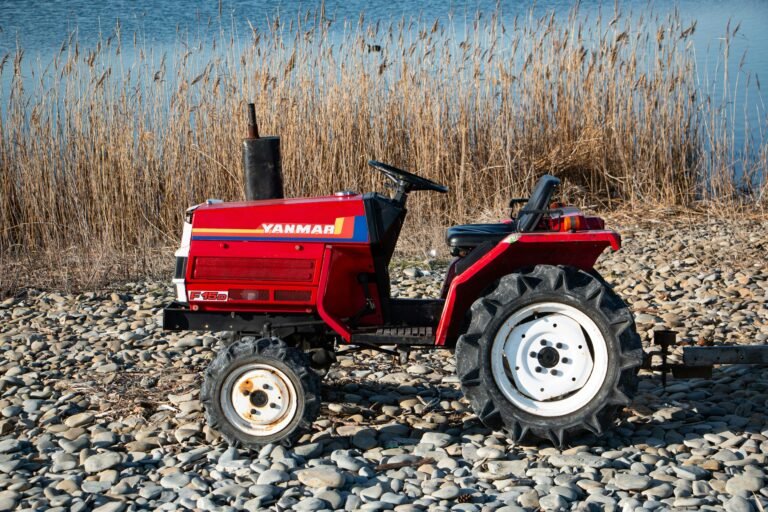
Knowing how to winterize a tractor starts with deciding what kind of winter it’s going to have. Most guides assume it sits in the barn until spring, but if you’re feeding cattle or pushing snow, it’s working all winter and needs a different plan. Either way, you want it to start the first time, with no mouse nest on the battery and no DEF frozen in the lines.
Parked Until Spring or Feeding Hay Every Morning
A parked tractor needs protection from condensation, rodents, and tires carrying the same load for months. A working tractor needs to handle a cold start every morning, which comes down to fuel blend, coolant, and a strong battery.
A few checks apply to both. Test the coolant’s freeze point with a tester. Yanmar’s storage guidance says it should be rated for the lowest temperature you expect to see. Check tire pressure too. Penn State Extension notes it drops about 1 PSI for every 10°F drop in temperature, so tires aired up in a warm fall can run low by midwinter. If your rear tires are loaded with calcium chloride, Penn State says to store them with the valve stem between the 3 and 9 o’clock positions rather than parked at the bottom in the solution.
Owners in a TractorByNet storage thread split on fluid timing: change in spring, or change engine oil, hydraulic fluid and coolant before storage so contaminants aren’t sitting all winter. Penn State leans toward before. If you’re near the oil change interval, do it now, since that oil may sit three to nine months.
Fuel Worth Protecting
On Oct. 16, 2026, Illinois farm diesel hit $5.76 a gallon, the highest in a USDA series going back to 2008, according to FarmDoc Daily. That’s not fuel you want to drain and replace in spring.
Penn State recommends keeping tanks full through big temperature swings, because less air in the tank means less condensation. Add a stabilizer like Lucas Oil Heavy Duty Stabilizer when you fill, then run the engine long enough for treated fuel to reach the filters and pump, not just sit in the tank.
For a tractor that works all winter, the problem is wax. Penn State puts the point where paraffin starts clumping at about 32°F, so ask your fuel supplier about a winter blend or anti-gel additive. Water in the tank, microbial growth, and clearing a plugged filter are covered in the tractor fuel system problems guide.
The Tier 4 Step That Takes 60 Seconds
If your tractor has a DEF tank, the fluid freezes at 12°F and expands about 7%, according to Cummins. That alone won’t keep you from starting. Cummins says frozen DEF doesn’t affect start-up or operation, because the system thaws it once the engine runs.
What matters is a step most owners never notice. At key-off, the DEF pump keeps running for about 45 to 60 seconds, pulling fluid out of the lines and back into the tank. Sloan Implement, a John Deere dealer in Illinois and Wisconsin, explains that the tank has a coolant line to thaw it, but the lines feeding the exhaust aftertreatment don’t. Flip the battery disconnect the second the engine stops, and DEF stays in those lines. Cummins gives the same advice: wait 60 seconds before shutting off the battery.
For bulk DEF, leave room in totes and drums for that expansion, keep the caps on, and store it between 12°F and 86°F. Cummins says keeping it below 65°F stretches shelf life to two years. Sources disagree on how full to leave the tractor’s own DEF tank over winter, so go by your operator’s manual.
Keeping Mice Out of the Harness
To a mouse, a parked tractor is warm, dry shelter. On TractorByNet, owner mikerose found a mouse nest on top of the battery of his Kubota BX after about two months without using it, and called the cleanup a “big project.” A Kioti owner found bedding under the lower dash panel and under the seat, where mice had come in through an opening at the firewall.
Home remedies get mixed reviews. Some owners swear by dryer sheets or peppermint oil reapplied monthly, but one Kioti owner found mice nesting in the dryer sheets, and traps and poison drew complaints that “the mice keep on coming.” Two habits keep coming up: leave the hood open, since light makes the spot less inviting, and loosely stuff a rag in the exhaust, with a note on the seat so it comes out before the first start.
Before that first start in spring, look over the harness. Chewed insulation can cause the same dead gauges and no-crank symptoms covered in the tractor electrical problems guide.
Battery, Grease, and Taking Weight Off the Tires
For a parked tractor, either pull the battery and store it somewhere warmer, or leave it in and keep a maintainer like the NOCO Genius 10 connected. Both owners who weighed in on battery storage in that TractorByNet thread pulled theirs. If the tractor works all winter, a block heater on a timer will help your cold starts more than anything else on this list. The tractor block heater guide covers fitment and how to avoid a barn fire.
Grease every fitting before you park it (the tractor grease guide covers which type to use), so fresh grease pushes out the water and grit packed into the pivots during fall work. A pistol-grip gun like the Bravex Heavy Duty gets you around the loader and three-point hitch in one pass. The same storage thread suggests blocking the tractor up so the tires aren’t carrying its weight, and tipping the bucket so it doesn’t hold water.
The Last Walk-Around Before You Shut the Door
- Test coolant freeze protection.
- Fill the fuel tank, treat it, and run the engine so the treated fuel circulates.
- Change the oil if you’re near the interval.
- Grease every fitting.
- On a Tier 4 machine, wait for the DEF pump to stop before killing the battery.
- Pull the battery or put it on a maintainer.
- Air up the tires and block the tractor so the tires carry no weight.
- Hood open, rag in the exhaust, note on the seat.
Does DEF Go Bad If It Freezes?
No. Cummins says the urea-to-water ratio stays the same through freezing and thawing, so it works normally once it thaws.
That’s most of what learning how to winterize a tractor comes down to: a full, treated fuel tank, a 60-second wait for the DEF pump, and nowhere comfortable for mice to spend the winter.