Massey Ferguson Tractor Problems: Transmission, Brakes, Hitch
Some links here are affiliate links — if you buy through them, Dirt Road Mechanic earns a commission at no extra cost to you. It never affects which parts or tools we recommend. Full disclosure.
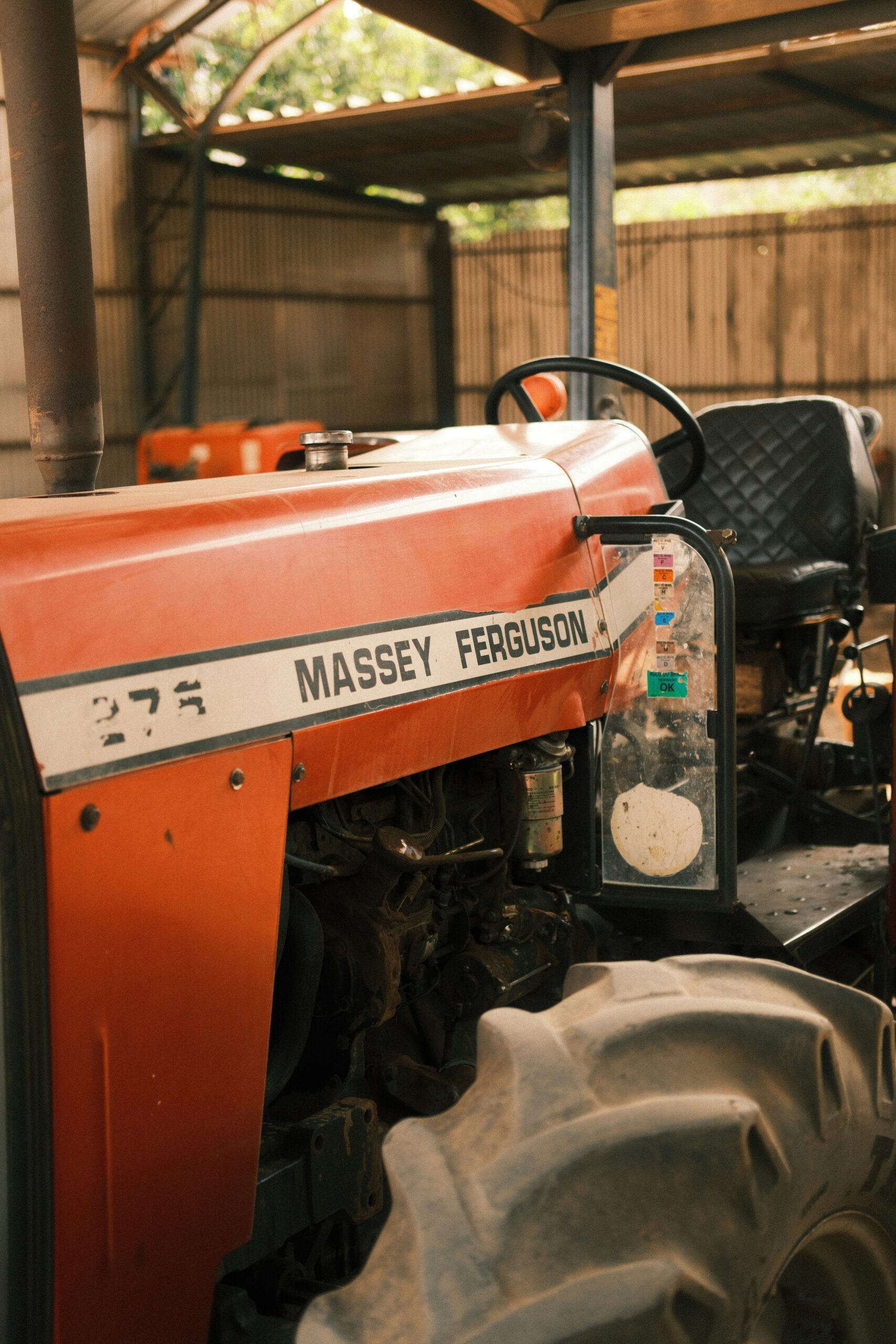
Massey Ferguson tractor problems don’t get talked about the same way John Deere or Kubota issues do, and that’s exactly the problem — because the owners who get burned the worst are usually the ones who bought without knowing what to watch for. This article covers the real Massey Ferguson tractor problems, the model-specific issues that cost people the most money, and a few fixes that are so simple they’ll make you want to kick yourself if you’ve already paid a dealer to do them.
Why Massey Ferguson Tractor Problems Split by Model Type
The first thing to understand about Massey Ferguson is that you’re really talking about two different machines depending on which end of the lineup you’re in. The larger utility tractors — the 4700 series, the 5700 series, the bigger row crop machines — have a solid reputation among people who run them hard. Farmers on TractorByNet who own the MF 4707 and similar models consistently report years of reliable service with normal maintenance. One owner who bought a brand new 70hp 4707 in 2022 described it as straightforwardly reliable after several years of real use.
The compact models are a different story. Massey Ferguson tractor problems on the MF 1531, the GC1725M, and similar machines follow a well-documented pattern that shows up early and often — four-wheel drive units shelling out, steering cylinders cracking, three-point hitch lift arms failing repeatedly, all within 1,500 hours. One owner on TractorByNet put it plainly: his father’s older John Deere 4100 at 22 horsepower outperformed and outlasted his 31-horsepower MF 1531 by a wide margin, and the AGCO representative eventually told him to cut his losses.
That’s not a knock on the whole brand. It’s a warning about which end of the catalog you’re buying from. The same split shows up with other brands that play in both compact and utility markets — owners consistently report in detail about Kioti tractor problems as well.
The Massey Ferguson Tractor Problem Most Owners Miss Until It’s Too Late
Here’s the Massey Ferguson tractor problem that catches people off guard: Massey Ferguson runs a single-oil system shared between the transmission, the hydraulics, and the wet brakes. That’s common on older designs, but what makes it dangerous is the failure chain it creates. When your brake discs wear down to the metal, the fiber material starts breaking up and circulating through the entire hydraulic system. By the time you feel a brake problem, you may already have contamination in your transmission and hydraulic pump.
The only early warning you get is a blocked filter warning light on the dash. If that light comes on, stop the machine immediately and don’t move it until you’ve checked the system. Don’t assume it’s just a dirty filter that can wait. On a Massey, that light is telling you something specific — and ignoring it can turn a filter replacement into a full system flush or worse. If you’re not sure how to test hydraulic system health after a contamination event, our tractor hydraulic problems guide covers the diagnostic process from the ground up.
This is the kind of thing that doesn’t show up in most Massey Ferguson troubleshooting guides, but it’s one of the most expensive mistakes owners make.
Massey Ferguson Dyna-6 Transmission Problems: The Fix That Costs $125
If you’re running a mid-range or larger Massey Ferguson with a Dyna-6 transmission and it suddenly won’t shift between ranges — or won’t move at all — don’t panic and don’t call a dealer before you check one thing first.
Range changes on the Dyna-6 are handled electronically through a bank of four solenoids mounted on the side of the transmission. These solenoids fail. When one goes, you lose access to certain ranges, and when the wrong ones go, the tractor won’t move. The solenoids themselves cost around $125 each and are straightforward to replace. The switches linked to them can also fail and run about $60. Farmers Weekly did a detailed breakdown of this exact Massey Ferguson tractor problem with input from an independent MF specialist — it’s worth reading if you’re trying to diagnose before you call a dealer.
This gets misdiagnosed constantly as a major transmission failure because the symptoms are dramatic — a tractor that just stops shifting is alarming. But mechanically, the Dyna-6 is a solid unit. It’s the electronics around it that create most of the Massey Ferguson tractor problems, not the gearbox itself. Before you authorize any major transmission work, make sure someone has actually tested those solenoids. A Fluke 115 multimeter will tell you whether a solenoid coil has failed in a few minutes — the same tool that handles tractor electrical problems across every brand.
One note for anyone running a Dyna-6 behind a big square baler: the transmission doesn’t handle the repeated jolting well on larger models. The ram shock causes premature synchro wear and can shear driveshafts over time. If you’re doing heavy baling work, a Dyna-VT is a better fit for that application.
The $20 Clutch Switch That Gets Misdiagnosed as a Massey Ferguson Transmission Failure
This one deserves its own section because it happens constantly on the 6200-series and newer Massey Ferguson models. There’s a switch in the pedal box called the Bottom of Clutch Switch. When it fails, you get complete loss of drive — the tractor just stops moving — sometimes with an error code on the dash, sometimes without.
That symptom pattern sends most people straight to transmission diagnosis mode. They assume something major has failed internally. In most cases, it hasn’t. The switch costs around $20; it sits right there in the pedal box, and once you replace it, there’s no additional programming or calibration needed. It just works.
If your Massey Ferguson tractor is losing drive and you haven’t checked that switch yet, check it before you do anything else. The same principle applies here as with the safety interlock switches that cause tractor PTO problems — a $15-20 switch gets misdiagnosed as a $500 repair constantly across every brand. Use Permatex dielectric grease on the connector when you reinstall it — moisture intrusion into that connection is part of why the switch fails in the first place.
Massey Ferguson Tractor Problems in Cold Weather
The MF 1725M has a specific cold-weather Massey Ferguson tractor problem worth knowing about if you’re in the northern half of the country. The emissions system on that model throws errors regularly when the machine is used lightly or operated in cold conditions. It’s one of the complaints that comes up consistently on forums and in owner reviews, and it’s the kind of thing that sends people to the dealer for what turns out to be a calibration or regen issue rather than a real mechanical failure. The same Tier 4 emissions sensitivity shows up in other compact brands — our tractor overheating guide has a section on how DPF regen cycles interact with light-use patterns.
Cold start problems on Massey Ferguson tractors generally follow the same diesel pattern — glow plug system, battery condition, fuel quality — but on the GC and compact series, a weak battery that tests fine at room temperature can fail badly at 15°F. If you’ve ever dealt with a tractor starter replacement that turned out to be a battery issue all along, you know how expensive that misdiagnosis gets. Keep a NOCO Genius 10 battery charger in the shop and put it on the battery before the first cold snap of the year. It’s a lot cheaper than a service call.
What This Means For You
If you own a Massey Ferguson utility tractor, you’re probably in decent shape. Keep up with fluid changes, pay attention to the filter warning light, and don’t run a Dyna-6 into heavy baling work if you can avoid it. The machines hold up when they’re maintained.
If you own a Massey Ferguson compact tractor, be honest about what you’re asking it to do. These machines are built for property maintenance and light farm use. When they’re pushed into farm work that a larger tractor should be handling, Massey Ferguson tractor problems multiply fast. That’s not a defect — it’s a mismatch between expectation and design. The documented pattern is with LS tractor problems — compact tractors from growing brands getting pushed harder than they were designed for.
On the parts and brand side, AGCO settled its long-running legal dispute with Indian manufacturer TAFE in July 2025. TAFE now owns the Massey Ferguson brand exclusively in India, Nepal, and Bhutan, while AGCO retains global ownership everywhere else. For North American owners, that means the parts and support chain runs entirely through AGCO now — no more confusion from the split arrangement. Whether that improves parts availability over time remains to be seen, but the supply chain uncertainty caused by the dispute has been resolved.
When you’re doing any hydraulic or filter work, a good UTTO hydraulic fluid compatible with your model is worth having on hand. On Massey Ferguson’s single-oil system, using the right fluid isn’t optional — the wrong fluid in that system affects brake performance, not just hydraulic response.
FAQ
What are the most common Massey Ferguson tractor problems? The most common Massey Ferguson tractor problems are hydraulic leaks, Dyna-6 transmission solenoid failures on mid-range and larger models, and the Bottom of Clutch Switch failure on 6200-series and newer machines. On compact models, four-wheel-drive unit failures and three-point-hitch problems occur disproportionately compared to other brands in the same class.
Are Massey Ferguson tractors reliable? The larger utility tractors have a solid reputation when properly maintained. The compact models have a weaker reliability record, particularly when used for heavy farm work rather than light property maintenance. The brand splits more sharply by model category than almost any other major tractor manufacturer.
Why does my Massey Ferguson lose drive suddenly? On 6200-series and newer models, the first thing to check is the Bottom of Clutch Switch in the pedal box — it’s a $20 part that causes complete loss of drive and gets misdiagnosed as a major transmission failure constantly. On models with Dyna-6 transmissions, failed range solenoids are the other common cause of this Massey Ferguson tractor problem. Check both before authorizing any major transmission work.
What’s your take on this? Drop it in the comments.