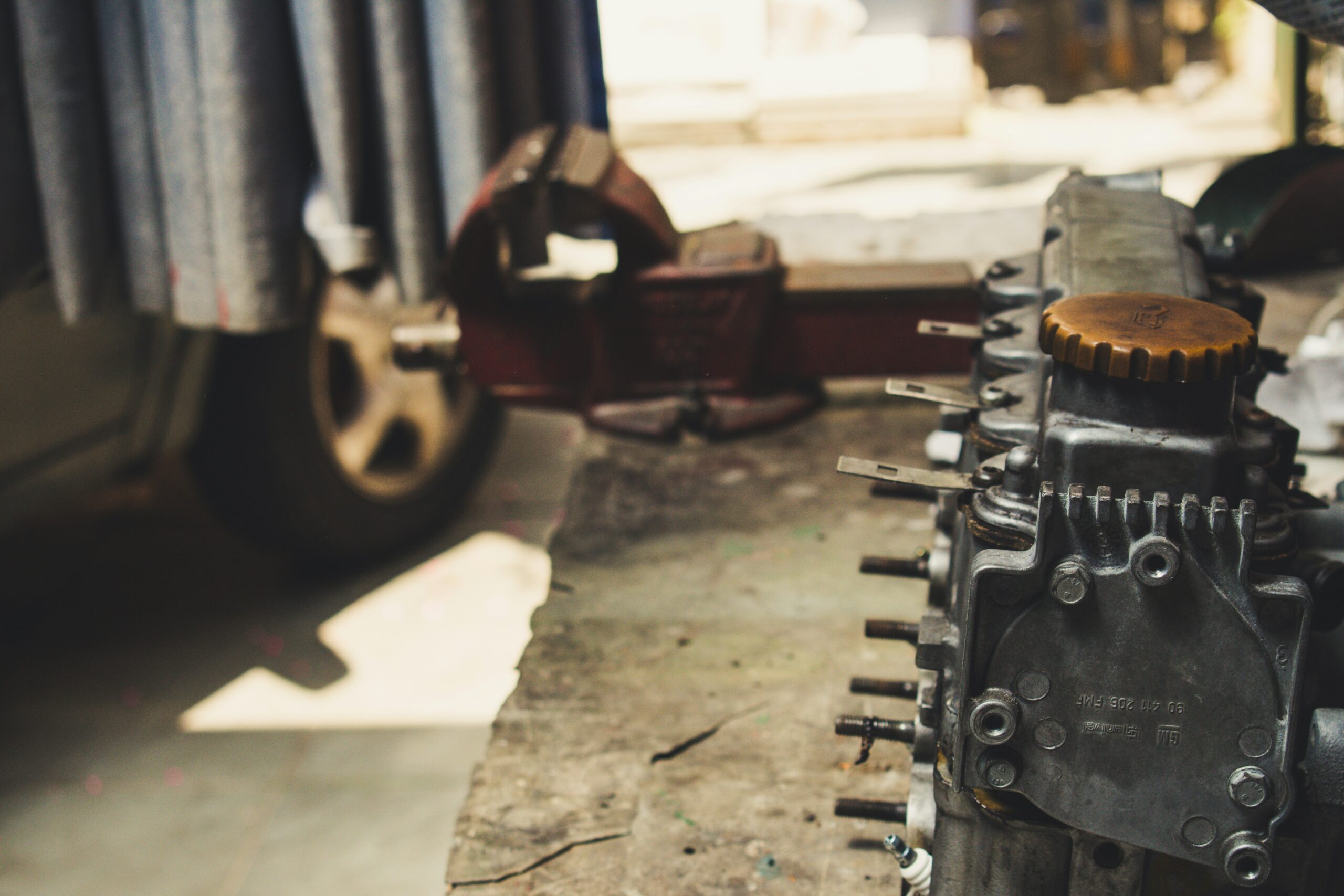
Tractor Clutch Repair: How to Diagnose and Fix a Slipping Clutch
Some links here are affiliate links — if you buy through them, Dirt Road Mechanic earns a commission at no extra cost to you. It never affects which parts or tools we recommend. Full disclosure.
Tractor clutch repair is one of those jobs that’s always cheaper the earlier you catch it — and almost always more expensive than it needed to be when you don’t. With farm machinery repair costs up 25% since 2021, according to University of Illinois research, nobody can afford to let a slipping clutch turn into a split-the-tractor job when a simple adjustment might have bought another season. This article covers both types of clutch problems, how to read the symptoms early, and the single biggest habit that kills clutches before their time.
The Two Types of Tractor Clutch Repair — And Why It Matters Which One You Have
Before you do anything else, you need to know which clutch you’re dealing with. There are two — the main drive clutch and the PTO clutch — and confusing them sends you down the wrong diagnostic path every time.
The main drive clutch connects the engine to the transmission. When it goes, you lose ground speed and pulling power. The PTO clutch is separate and controls power flow to implements — a brush hog, a tiller, and a generator. You can have one fail without the other. A quick way to narrow it down: if your tractor won’t pull but the PTO still spins normally, the main clutch is your problem. A multimeter is useful for checking PTO clutch solenoids and electrical engagement circuits on tractors with electronic PTO controls. If the PTO is slipping or grinding when you engage it, but the tractor drives fine, you’re looking at the PTO side. Farmers on TractorByNet use this test constantly — one member diagnosed a TC45 slipping issue specifically to the main clutch because the PTO engagement was still clean despite the machine barely being able to pull itself in low gear.
Knowing which one you’re dealing with determines everything — what you’re listening for, where you’re looking, and what the tractor clutch repair is going to involve. If you’re dealing with a PTO-side problem specifically, our tractor PTO shaft repair guide covers the downstream components worth checking at the same time.
How to Tell If You Need Tractor Clutch Repair or Just an Adjustment
Here’s something a lot of owners don’t know: mechanical clutches wear gradually, and as the friction disc wears thinner, the free play at the pedal decreases. Less free play means the throwout bearing starts riding against the pressure plate fingers even when you’re not pressing the pedal, which accelerates wear on the bearing and starts to affect clutch engagement. The fix isn’t always a full teardown. It’s often just an adjustment through the linkage.
If your tractor is slipping in the higher gears but holds in the lower ones, that’s a classic early-wear symptom. Check your free play first. Most mechanical clutch systems call for about one inch of free play at the pedal before you feel resistance. On many compact tractors, there’s a turnbuckle under the left side of the machine that you can adjust without touching anything else — loosen the jam nut, turn the turnbuckle until you restore that inch of travel, and snug it back up. A TractorByNet thread on this specific adjustment shows it taking about ten minutes with two wrenches.
If you’ve made that adjustment and slippage returns within a short time, or you’re running out of adjustment range, you’re likely past an adjustment fix and into actual tractor clutch repair territory — meaning the friction disc is worn enough that it needs replacing.
The warning most people ignore: heat. A clutch that smells hot after normal work, or a tractor that progressively loses pulling power across a work session, is burning up disc material. The more it slips, the more heat it generates, the more it warps. A warped flywheel or pressure plate turns a $300 disc replacement into a $1,200 job. Catch it at the smell, not at the stall.
Quick Diagnosis: Adjustment, Repair, or Replacement?
| Symptom | Which clutch | Most likely cause | Usual fix |
|---|---|---|---|
| Engine revs but ground speed drops in the higher gears | Main drive | Worn disc, or no free play left in the pedal | Check free play first; adjust the linkage, and replace the disc if adjusting doesn’t fix it |
| Burning smell after loader work or heavy pulling | Main drive | Riding the clutch to control speed | Change operating habits; inspect for glazing |
| Grinds going into gear, or the tractor creeps with the pedal down | Main drive | Too much free play, so it isn’t fully releasing | Adjust the linkage |
| Pedal feels spongy or sinks to the floor (hydraulic clutch) | Main drive | Air in the lines, or a leaking master or slave cylinder | Bleed the system; look for wet spots at the cylinders |
| Squeal or chirp when the pedal is pushed | Main drive | Throwout (release) bearing | Replace the bearing; this means splitting the tractor |
| PTO light on, but the implement slows or stops under load | PTO | Slipping PTO clutch, or the cutter is too big for the tractor | Check implement sizing; adjust or replace the clutch pack — see our PTO problems guide |
| PTO won’t engage and the light stays off | PTO (electrical) | Fuse, seat or safety switch, or solenoid | Test the electrical side before touching the clutch — full PTO electrical walkthrough |
| Burning smell or overheating around the PTO | PTO | Clutch slipping under sustained load | Stop running it and inspect before wear gets worse |
The Real Reason Most Compact Tractors Need Early Clutch Repair
This one’s not mechanical. It’s a habit.
The number one cause of premature clutch failure on compact tractors is riding the clutch during loader work — specifically, using partial clutch engagement to inch a loader bucket forward instead of using low gear and throttle. It feels controlled and precise, but what’s actually happening is the friction disc is slipping against the flywheel under load, generating heat, and cooking itself from the inside out. The disc glazes, the holding power drops, and eventually the clutch won’t hold under any real load.
A thread on TractorByNet involving a New Holland TC45 that started slipping with only 260 hours on it traced back to exactly this — the problem started while the owner was running the loader. A compact tractor with 260 hours shouldn’t have a worn clutch. It had operator habits.
The fix is simple: get into the habit of coming to a full stop before engaging gears, using low range for loader work, and keeping your foot completely off the pedal unless you’re actively shifting. That’s not a rule — that’s the difference between a clutch that lasts 2,000 hours and one that needs tractor clutch repair at 400.
Hydraulic Clutch Repair Is a Different Animal
If your tractor has a hydraulic clutch — common on larger cab tractors — forget everything above about adjustments. Hydraulic clutches are self-adjusting and don’t fail the same way mechanical ones do. When a hydraulic clutch goes wrong, you’re usually dealing with one of three things: fluid loss, a failed slave cylinder, or a failed master cylinder.
The symptom is different, too. Instead of a gradual slip, you get a pedal that goes to the floor with little or no resistance — or a pedal that builds pressure slowly by pumping it. On MyTractorForum, a JD 2950 owner described exactly this: pedal to the floor, the tractor wouldn’t disengage the drivetrain, traced back to a failed master cylinder after the slave cylinder checked out. The hydraulic system had lost fluid from the reservoir and introduced air into the line.
The diagnosis is straightforward: check the clutch fluid reservoir first. If it’s low, you leak somewhere in the system — master cylinder, slave cylinder, or a line. Bleed the system after refilling to get air out. If the pedal comes back with pressure after bleeding, you’ve found your problem. If it doesn’t, the master or slave cylinder itself has likely failed internally and needs replacement.
One thing to know about hydraulic clutch repair on enclosed systems: some slave cylinders live inside the bell housing, which means accessing them requires splitting the tractor. Know that going in before you start pulling things apart. If your machine has other hydraulic symptoms alongside the clutch issue, it’s worth checking our tractor hydraulic repair guide — sometimes a broader hydraulic pressure problem is contributing to what looks like a clutch-only issue.
What This Means For You
Tractor clutch repair doesn’t have to be a budget disaster if you’re paying attention. Here’s what to keep in mind:
Check free play at the pedal seasonally. On mechanical clutches, this is the single best preventive step you can take. While you’re under there, hit every zerk fitting with a grease gun — a LockNLube coupler makes reaching the tight ones on the linkage much easier. A few minutes with a wrench can extend clutch life significantly. It fits naturally into your broader farm equipment maintenance routine — add it to the list when you’re checking fluids and greasing fittings.
Change your loader habits. If you use a front-end loader regularly, this is the most important thing in this article. Full stops, low gear, foot off the pedal. The clutch will last dramatically longer.
Don’t let a slipping clutch keep working. The longer it slips, the more heat it generates, and the more components it takes with it. A slipping clutch caught early is a disc job. A slipping clutch ignored long enough is a flywheel, pressure plate, and disc job — plus machine downtime during a season when you need it running.
On hydraulic clutches, start with the fluid. Before assuming a major repair, check the reservoir. Low fluid with air in the system is cheap to fix. A failed slave inside the bell housing is not.
The bottom line on tractor clutch repair: catch it at the symptoms, not the failure. Your machine and your wallet will both thank you.
What’s your take on this? Drop it in the comments.
Frequently Asked Questions
How do I know if my tractor clutch needs to be replaced? The clearest signs are slipping in the upper gears while the engine revs freely, a burning smell after loader work or heavy pulling, and a pedal that has lost its free play. On mechanical clutches, check whether adjusting the pedal linkage restores normal operation. If the slipping returns quickly after adjustment, or if you’ve run out of adjustment range, the friction disc is worn past serviceable limits, and tractor clutch repair is needed. Catching it at this stage — before the flywheel and pressure plate show heat damage — keeps the job manageable.
Can I adjust a tractor clutch myself without splitting the tractor? On most mechanical clutch tractors, yes. The adjustment is made through the pedal linkage — usually a turnbuckle or threaded rod on the left side of the machine that connects the pedal to the release arm. The target is typically about one inch of free play at the pedal before you feel resistance. This takes basic hand tools and a service manual for your specific model to confirm the spec. Hydraulic clutches are self-adjusting and don’t have this linkage — if a hydraulic clutch is behaving abnormally, the diagnosis starts with fluid level and system bleeding, not mechanical adjustment.
What causes a tractor clutch to slip with low hours? Operator habits are the most common cause by far. Riding the clutch during loader work — using partial clutch engagement to control ground speed instead of using low gear — generates friction and heat that glazes the disc and causes premature slipping. A tractor can show clutch wear at a few hundred hours if it’s been operated this way regularly. Other causes include a contaminated friction disc from an oil seal leak into the clutch housing, and on hydraulic clutch systems, low oil pressure that prevents full engagement of the clutch pack.